

Programming and periodisation are two of several topics that people seem to endlessly debate, but never seem to get clear traction on. What this says to me is that there’s a vast array of application and subjectivity in experience here.

In the clearest terms, the most “evidence based” or perfect program doesn’t mean anything if you don’t actually do it. Further, it doesn’t matter how well you do it if you can’t continue to do it until you develop or achieve the results you’re seeking.
Par for the course then, the number one New Year’s resolution is “to lose weight.” How many people do you know that have been trying to lose the same 10 pounds for the last 10 years? Most of those resolutioners will have abandoned the gym by the time Valentine’s Day arrives, let alone getting beach bodies ready in July or having sustained enough good habits to ward off Thanksgiving.
This isn’t a case of moderation. It’s a case of having an unflinching assessment of yourself and your ability to meet the goals you’ve set. Do you even have the requisite tools and skill sets? The time and discipline you’re willing to give now always feels like enough when the stoke and vibes high, what about when it isn’t?
Dan John proposed a Rule of 10; for every 10 training sessions, about 1 will feel great, 3 or 4 of them will feel more or less “average”, and about half of them will suck and make you question why you started in the first place. If he’s correct, then you better have an answer ready because you won’t think of the right one on the spot!
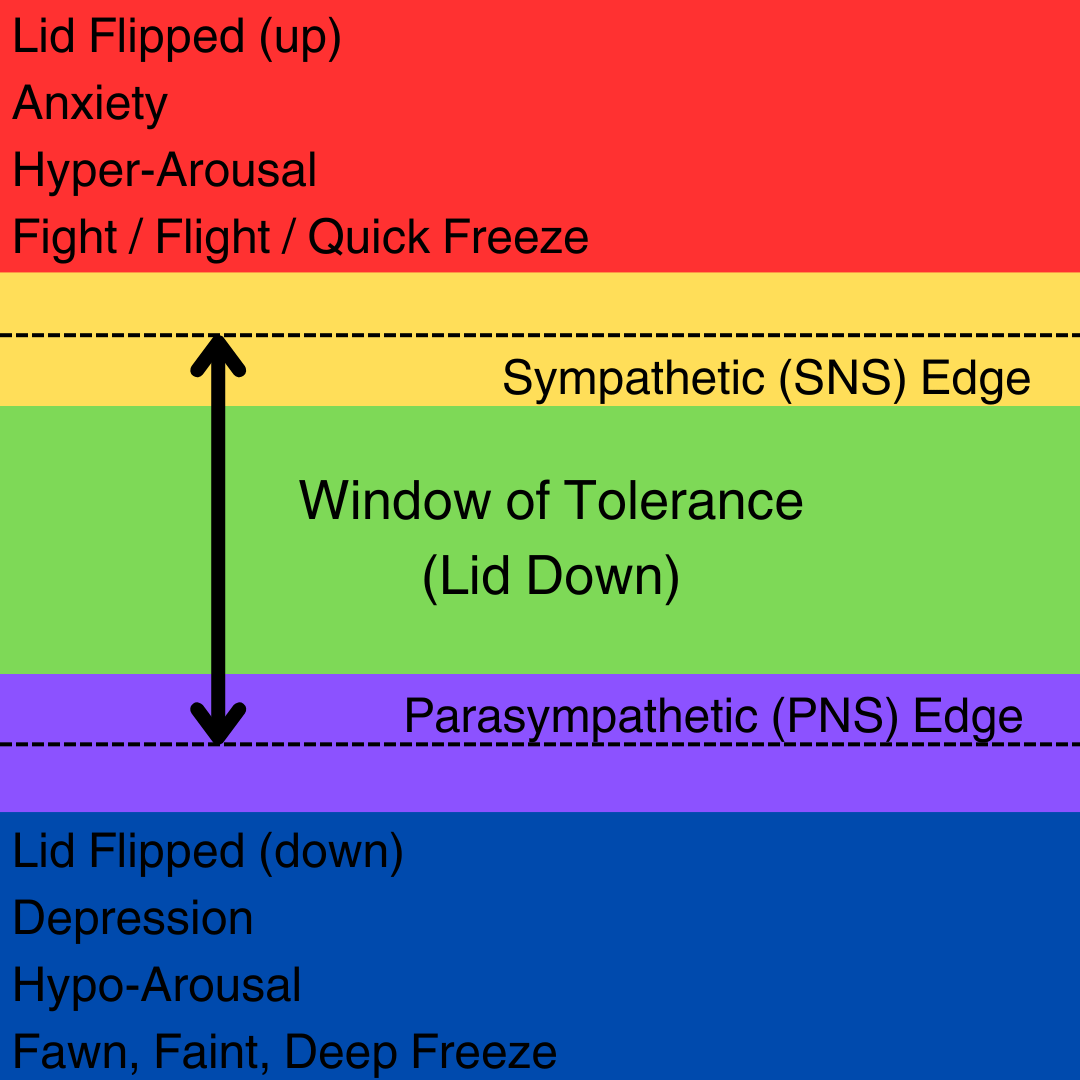
Polyvagal and trauma theories can teach us a lot about adaptation and overstimulation. “The Window of Tolerance” (above) is commonly used to illustrate over/understimulated states where we start to lose cognitive functioning – literally, the frontal cortex of our brain goes “offline.”
What most graphics depicting “The Window of Tolerance” leave out are the para/sympathetic edges. These are our “growth zones.” We are notably uncomfortable, however there is a gradient process from challenged to threatened. We are able to grow, which is to say adapt to and overcome a stimulus, when carefully and tactfully enter our discomfort zone (below).
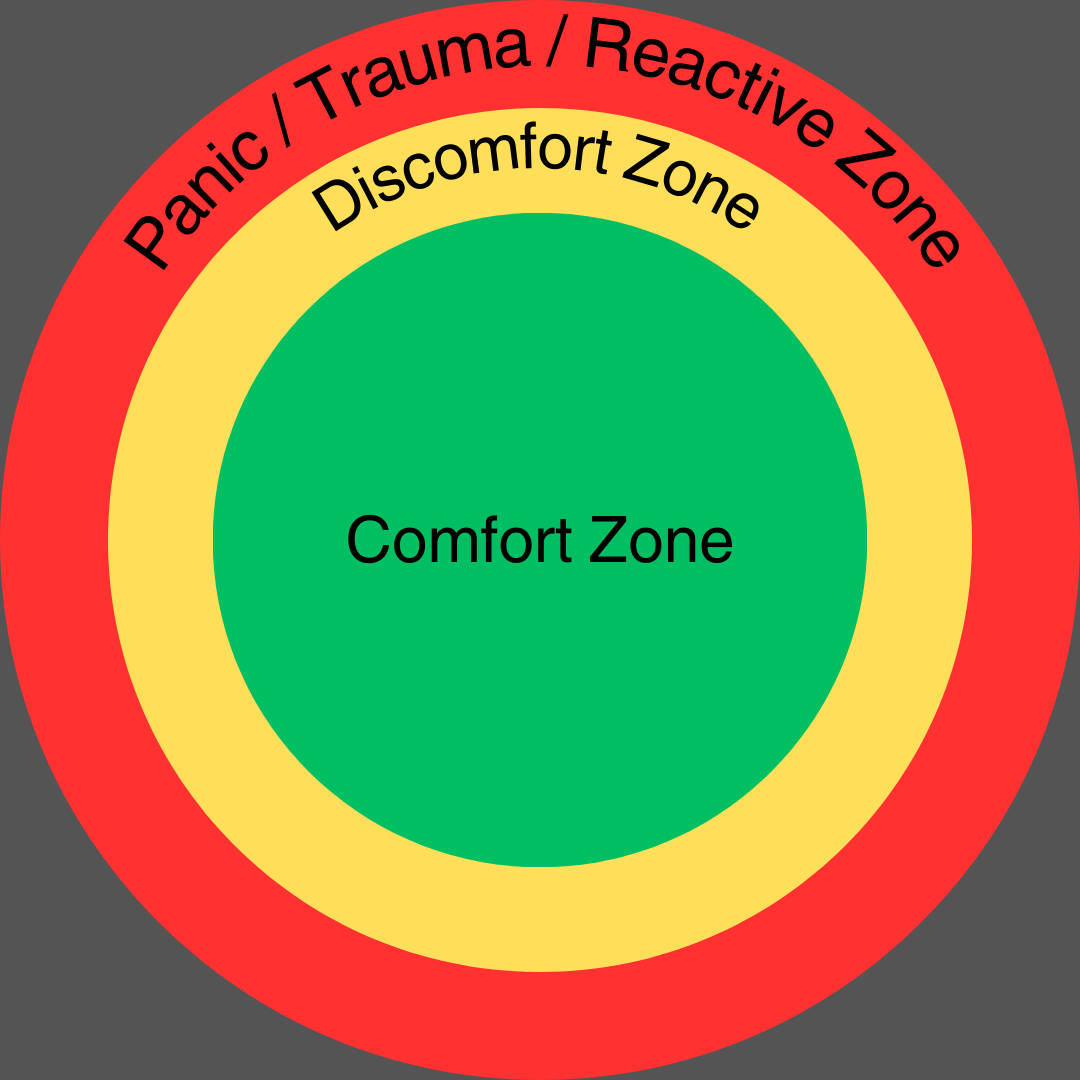
The target depiction of The Window of Tolerance helps give us a 3D view of the same concept. When we stay in our comfort zone it feels nice. The irony is that it will atrophy, like a muscle that never gets tensed, stressed, or utilized, it just stays in a cast.
By contrast, if we fling ourselves into a degree of over (or under) stimulation (e.g. New Year’s crash dieting or adopting a professional athlete’s training program) we provoke a reactive, often maladaptive, response. In other words, we are no longer challenged, but threatened. As a result we find a way, via various “coping” or “defense mechanisms”, back to our comfort zone. As we already mentioned, playing it safe often leads to losing in the long run.
The last thing I’ll say about this is that the experience is not always the same for everyone. Certainly, many people in America in 2025 are overcome with a “comfort crisis”, they want an easy job with lots of free time, and tons of money; but life doesn’t work like that.