

Long gone are the days in submission grappling where you can get away with half-assed takedowns, shooting-and-praying, and ignoring physicality.

There are a few hills I’m willing to die on regarding grappling training:
Two things you can never be too good at are:
takedowns and
escaping bad positions.
Physicality is a weapon…
and you should train it.
Particularly with the growing popularity of ADCC-style tournaments and the epic scrap between Kade Ruotolo and Andrew Tackett at CJI-1 these opinions have been solidified in my mind.
Particularly at my gym, where we’re known for having good wrestling — by jiu jitsu standards — you cannot get away with a clunky shot and hoping your opponent falls down or concedes the position.
In my own training, I’ve been doubling down on my wrestling recently and focused on set-ups, feints, follow-through, and overall output. However, there’s a cost to that output and that is what I want to focus on today.
Before discussing my recent training trends, I want to review some great data collected by Mat Stats that gives more reason to emphasize the importance of pace and physical output.
Regarding 2024 Olympic Wrestling, the author notes that (*):
“The average number of points-scored over the tournament for bronze, silver, and gold medalists were, respectively, 28.8, 30.7, and 31.2. For points-allowed, the averages were 14.3 for bronze, 11.0 for silver, and 7.8 for gold. Viewing the ranges as a box-and-whisker chart it becomes clear that defense does indeed win championships.”
Similar conclusions can be found in the author’s analysis of the 2025 NCAA championship (*):
“One of the main reasons cited for changing the takedown value from 2 to 3 points was to incentivize scoring more takedowns, and a commonly posed concern was that this would de-incentivize mat wrestling. Looking again at the NCAA championship data from 2022 and 2023 and comparing the data to the post-3-point-takedown era, both takedowns and riding time are down considerably. There were 1299 takedowns in the 2025 championships, compared to 1521 in 2022, although 2024 takedowns did surpass 2023. More years of data are needed to draw any statistically significant conclusions, and it should be noted that advances in defensive techniques are likely more responsible for this shift than the scoring format.”
There are a lot of technical and strategic interpretations we could make from this, but what I’d like to offer for the time being is that higher output and being more aggressive with offensive attacks is a good defense. It’s hard for an opponent to turn momentum in their favor and establish attacks of their own if they’re constantly defending and being put off balance.
Again, I will stay within the physical / fitness realm for this post, but we do see testament to this with Mica Galvao in addition to the gentlemen I’ve mentioned above.
In short, one way to become a “gym menace” is to develop an irreverent and relentless pace. This doesn’t mean being “going for blood” every round. It means that “fatigue makes cowards of us all.”
“Stop using strength (power, muscle, etc.)” is a ridiculous proposition in a physical expression like combat sports. To the contrary, understanding energy systems and executing explosive movements tactically is a far more valuable inquiry.
Explosive movements are like hitting the “turbo” button in a video game. You get a short-term burst in output at a disproportionate metabolic / aerobic cost. The faster your go, the faster your energy reserves get depleted.
The physics equation for kinetic energy explains this simply and effectively:
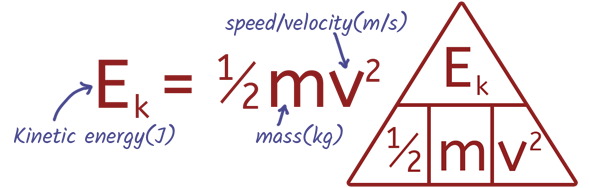
One thing to note here is that velocity, not mass, has the exponent. That means that if we are in the same weight class and I move faster (i.e. more explosively) I deliver more energy (force).
If we reverse the equation, we can also conclude that delivering more force — via moving the same mass at a greater velocity, or moving a larger mass at the same velocity — requires more energy.
Queue the relevance of energy systems. It should be noted that these aren’t nearly as distinct and categorical as many people would like to believe. They’re more like dials on a sound board that are all more-or-less operating to some degree all the time.
Getting back to my own training, a couple months ago I noticed that I was getting more out of breath than usual after sparring rounds. At first I thought, “What happened? How did my ‘cardio’ go to shit?”
Well, it should be pretty obvious with evidence above. If I had approximately the same aerobic base and had a higher rate of output (feints, level changes, and takedown attempts) I’m going to “feel” more tired.
Thus, this is a deficit in or challenge to (anaerobic) capacity, not endurance.
Here’s the catch though, always training the middle heart-rate zones (e.g. 70-80% MHR) often leaves us sharp, but brittle. We miss out on the benefits of training at either end of the bell-curve. This is what happens when we “just roll more” or use sport training as our only means of conditioning.
On the high end, the “sharp but brittle” analogy becomes more poignant. You literally cannot be in “peak” condition all the time — that’s called a plateau. Additionally, the rate and risk of injury increases exponentially the longer you try to “hold” or maintain that peak.
So, the solution I proposed to myself was to start over rebuilding an aerobic base. I will admit, it’s a long road to translate LISS (low-intensity steady state) training into on-the-mat conditioning, but that doesn’t change the fact that every other metabolic energy system is contingent upon your ability to breathe.
Much like the training itself, these adaptations are slow and longstanding; that’s why we call it “building a base” or foundation.
I want to point out as well that endurance doesn’t have to be monotonous monostructural activity like endless miles on a treadmill. There are countless combinations of intervals, circuits, and ladders that can produce the same (cardiometabolic) adaptations.
In the last few weeks, the working segments of my fitness sessions have been:
30 minutes
45 minutes
35 minutes
50 minutes
40 minutes
55 minutes
With holidays and travel coming up, I’ll probably continue this trend throughout the end of the year. If I can control my heart rate through 60-90 minutes of continuous movement I’d feel pretty confident in increasing the pace or output for shorter intervals all the way down to match-length rounds.
Now, we’re back to talking about capacity — work / time.
However, the intermediate block between endurance and anaerobic capacity is aerobic capacity. This is hell, a place where the challenge is oxygenation and the clearing of metabolic waste. The lungs and PH balance are under attack. There is nothing fun about this. This is where your mettle is tested and forged, with an unbelievably high recovery cost — constituted on the effort you deliver.
After that you’re well prepared for those beloved intra-round circuits that “feel like grappling”; a comfortable kind of suck, though a dumpster fire of combined energy system thrashing in their own right.
I know this is a long road and process that I’m describing. Most things that are worth having take patience. It takes knowing and understanding yourself to execute appropriately and deliver the desired results without either giving up or cooking yourself.
That’s maturity.
Being able to see the longview and start planning and delivering on year-long training arcs and lifetime careers rather than any given month or 6-week training camp is the definition of longevity.
Who knows, maybe by the end of 2026 I’ll find myself in an Olympic Weightlifting training block again!